Frailejones!
- Fant Flora
- 26 abr 2025
- 2 Min. de lectura
Actualizado: 14 may 2025
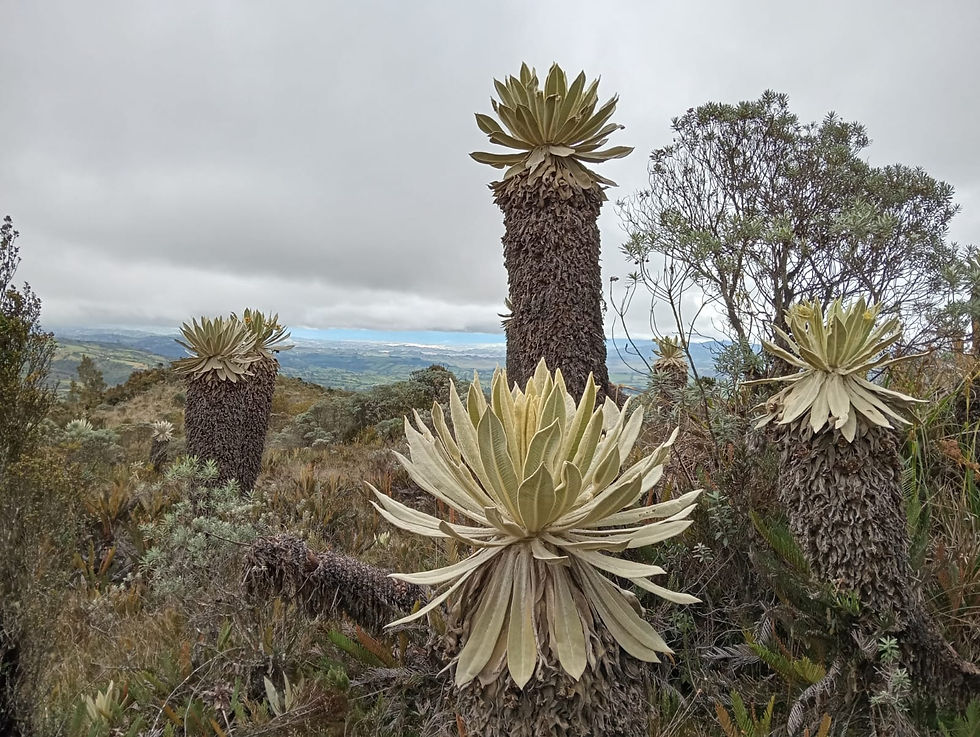
Frailejones are among the most iconic and ecologically important species in the páramos, the high-mountain ecosystems of the Northern Andes. With their striking, tall, and fuzzy appearance, these plants are more than just visually remarkable—they are crucial to water regulation, soil health, and biodiversity conservation. Their structure allows them to capture and store water from mist and rain, gradually releasing it to sustain surrounding life. In this way, frailejones serve as micro-ecosystems, offering shelter and support to a range of other species (Rodríguez et al., 2017).
Colombia: A Global Stronghold for Frailejones
Colombia is home to the greatest diversity of frailejones in the world, with 88 recorded species, of which 75 are endemic—found nowhere else on Earth (Díazgranados & Castellanos, 2017). This makes the country a vital hub for the preservation of this unique genus.
A Transboundary Treasure
One notable species is Espeletia pycnophylla, a variant endemic to Ecuador but also naturally found in Colombia’s Nariño department, near the border. Its presence in both countries makes it a symbol of shared ecological heritage in the Andes (Suárez et al., 2024).
This species is a keystone in its habitat, meaning its existence supports the structure and stability of the entire ecosystem. Its thick, moisture-retentive stem houses various small animals, including spiders, beetles, flies, and caterpillars, providing both shelter and food. This interdependent relationship makes E. pycnophylla a self-sustaining ecosystem in itself (Rodríguez et al., 2017).
Climate Resilience and Ecosystem Services
Beyond biodiversity support, Espeletia pycnophylla plays a vital role in ecosystem services:
Its deep roots help prevent soil erosion and reduce sediment runoff into rivers.
Its flowers attract pollinators, contributing to reproductive cycles of surrounding flora.
Its unique ability to channel and store water makes it a natural climate regulator, critical for water supply in high-altitude areas.
Because of these traits, E. pycnophylla is increasingly recognized as a key ally in the fight against climate change (Rodríguez et al., 2017).
Threats to Frailejones
Despite their resilience, frailejones face growing threats:
Habitat destruction, particularly from deforestation and agricultural expansion.
Biotic stress from interactions with insects like butterflies, moths, and beetles, as well as fungi that may weaken their structure.
However, the most urgent and pervasive threat is climate change, which disrupts the delicate balance of temperature and moisture that frailejones depend on to survive and reproduce.
A Call to Action
Protecting species like Espeletia pycnophylla means protecting the water sources, biodiversity, and climate resilience of the entire páramo ecosystem. Awareness, research, and conservation efforts are essential to ensuring these living pillars of the Andes continue to thrive for generations to come.
References:
Diazgranados, M., & Castellanos, C. (2017). Conversatorio sobre frailejones de Colombia: revisión del estado de conservación y amenaza. DOI:10.13140/RG.2.2.33206.52807
Rodríguez, R., Tigmasa N., García, K., Pazmiño, R., & Caamaño, R. (2017). New and Views, 2 (1), 273-276).
Comentarios